
Taiwan is world-renowned for its technological development, manufacturing, and operation ability. In June 2025, the amount of export orders was 56.77 billion U.S. dollars, a decrease of 1.16 billion U.S. dollars over the same period last year, an annual decrease of 2.0%. The semi-conductor market share reached 26% in 2021; the productivity of the wafer foundry is the top of the world, accounting for 70% market share. IC package productivity is also number 1 in the world, accounting for about 20% market share. Therefore, Taiwan’s technology industry strength is in a leading position globally. Over 70% of overseas investment is concentrated in Taipei City, with nearly 70% of foreign companies based here. In addition, newly emerging industries such as biotechnology; service; cultural and creative; and meetings, incentives, conferences, and exhibitions (MICE) industries have developed rapidly in recent years, receiving a lot of attention and positive recognition in international markets.
Overseas Investment
| Indicator | Taipei City | Taiwan | Proportion (%) |
|---|---|---|---|
| Total Overseas Investment (US$100 Million) | 16.09 (2025, Q1) | 22.56 (2025, Q1) | 71.32 |
| Number of Registered Overseas Companies | 3,650 (Jan. – May 2025) | 5,562 (Jan. – May 2025) | 65.62 |
Biotechnology Industry
Current Development
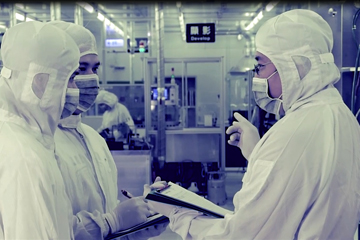
Taipei City is home to 584 biotechnology companies with total revenues approaching NTD 275.6 billion. The city accounts for 60% of Taiwan’s total biotech revenues, firmly leading the national biotechnology industry.
Within the three major categories of the biotech sector: (1) Applied Biotechnology is the largest segment with 276 companies (47.3%), (2) Medical Devices follow with 181 companies (31%), (3) Pharmaceuticals account for 127 companies (21.7%).
By sub-sector, the largest groups are in related technical services and food biotechnology.
Competitive Advantages
- Taipei boasts the most comprehensive talent pool and the highest concentration of research institutes and medical centers in Taiwan, including Academia Sinica, the National Applied Research Laboratories, the Development Center for Biotechnology, the National Health Research Institutes, more than a dozen major research institutions, 8 medical centers, 25 innovation incubation centers, and 20 universities and colleges with biotech- and pharmaceutical-related departments.
- Through collaboration between Taipei City and Academia Sinica, the city connects basic research (Academia Sinica), new drug development (National Biotechnology Research Park), and clinical trials (Taipei Biotech Industry Cluster). Together with Nangang Software Park, the High-Speed Rail, and Nangang’s transportation network, this ecosystem links to the Hsinchu Biomedical Science Park to boost the growth of the Nangang Biotech Cluster.
- The city is redeveloping the Zhongxiao Barracks site and adjacent municipal land to provide R&D laboratories and small-scale pilot production facilities. This initiative supports biotech startups in scaling from R&D to clinical trial production, offering sufficient development space for growth. It is expected to create nearly 5,000 jobs and generate NTD 33.8 billion in annual biotech industry output.
- Within Taipei’s technology corridor, the next major hub will be the Beitou-Shilin Technology Park, next to high-quality residential areas like Beitou and Tianmu. The area is surrounded by premier medical and academic resources, including Taipei Veterans General Hospital, Cheng Hsin General Hospital, Shin Kong Hospital, Taipei Cancer Center, National Yang Ming Chiao Tung University, and the Ministry of Health and Welfare’s National Research Institute of Chinese Medicine. Combined with Taipei’s strong ICT foundation, the park is positioned to become a leading center for smart healthcare and medical technology innovation.
Information and Communication Technology (ICT) Industry

Current Development
Taipei City is home to 11,946 registered ICT companies, with a total production value of USD 183.4 billion (approximately NTD 5.5 trillion). Related industries such as cloud services and technology employ over 250,000 people.
The Nangang Software Park and Neihu Technology Park together host around 200,000 technology professionals, attracting numerous internationally renowned companies to invest and establish operations. These two parks account for nearly one-third of all corporate headquarters and R&D centers in Taipei City.
Metropolitan High-Tech Park: Neihu Technology Park
The first metropolitan high-tech park in Taiwan was initially developed and invested in by the private sector. Later, the government expanded the scope of eligible industries, enabling the park to grow into a dynamic hub for knowledge-based economy sectors such as R&D and design, marketing, and professional services. Today, the park hosts a concentration of high value-added industries, including information technology, communications, and biotechnology.
| Positioning | Special Zone for Corporate HQ, ICT, Digital Content, Biotech R&D | ||
|---|---|---|---|
| Park area | 1.4972 square kilometers | Employment | 173,634 people |
| Annual corporate revenue | US$ 148 billion | Companies registered | 4,990 |
| Corporate Headquarters | 31 | R&D Centers | 108 |
One of the World’s Top Three Intelligent Technology Parks: Nangang Software Park
The park offers a dedicated operational environment for strategic core industries such as software development and biotechnology. Its overall development focuses on three key knowledge-based sectors: biotechnology, IC design, and digital content. To enhance the park’s livability and functionality, it also welcomes supporting service industries, ensuring a complete ecosystem for work and daily life.
| Positioning | Biotechnology, IC design, and Digital content | ||
|---|---|---|---|
| Park Area | 0.0967 square kilometers | Employment | 23,744 people |
| Annual Corporate Revenue | US$ 34 billion | Companies registered | 494 |
| Corporate Headquarters | 4 | R&D Centers | 15 |
Source: 2023 statistics of Ministry of Economic Affairs and the 2023 Taipei Industrial Park Survey and Analysis Report of Department of Economic Development, Taipei City Government
Competitive Advantages
- To strengthen Taipei’s industrial market position, the city launched the Neihu 2.0 Plan, centered on Neihu Technology Park and expanding to six city-owned sites, including the Dawan South Industrial Zone, Neihu Phase 5, and Luzhouli Industrial Zone. The plan establishes platforms for startup networking and exhibitions, entrepreneurship incubation bases, and industry innovation centers, integrating existing park resources to position Neihu as a strategic base of industrial transformation and upgrading in line with global market trends.
- Through the adaptive use of municipal-owned properties, the Neihu 2.0 Plan brings in emerging sectors such as cloud computing, the Internet of Things (IoT), autonomous vehicles, and green energy. In parallel, Taipei is advancing the Beitou-Shilin Technology Park and Shezi Island Eco-Development Plan to create strategic reserves for future industries, including ICT, biotechnology, and smart healthcare, ensuring the city’s role as a leader in next-generation innovation.